
Manicure and pedicure - nail design
Japanese manicure – the secret to healthy nails
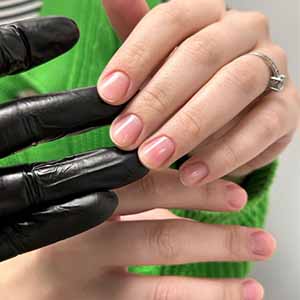
Japanese manicure is a special nail care method that comes from Japan. It is one of the most natural and effective techniques, which not only improves the appearance of nails, but also affects their health. Thanks to the use of natural ingredients and special techniques, Japanese manicure has become popular all over the world. It is a great solution for those who want to take care of their nails in a gentle yet effective way.
What is a Japanese manicure and what are its benefits?
A Japanese style manicure is a care technique that involves applying a special paste made from natural ingredients such as vitamins A and E, keratin and beeswax to the nails. As a result, the nails become stronger, healthier and more flexible. Japanese manicure not only improves their appearance, but also regenerates the nail plate, providing it with essential nutrients. It is an ideal option for people with weak and brittle nails.
In addition, Japanese nail manicure provides a protective effect, helping to prevent premature nail breakage and splitting. This method involves introducing nutrients directly into the nail plate, making it more resistant to mechanical damage and everyday external factors. Japanese manicure is also recommended for people who are looking for a natural alternative to traditional nail polishes, as it does not require the use of chemical substances. It is also ideal as a regenerating treatment after intensive manicure or pedicure procedures.
Advantages of Japanese manicure:
- Naturalness: Japanese manicure uses only natural ingredients that do not damage the nails.
- Regeneration: The process of moisturising and nourishing the nails supports their regeneration.
- No chemical ingredients: The technique does not require the use of harmful chemicals such as varnishes or hardeners.
- Protection against damage: Japanese manicure helps protect nails from external damage and brittleness.
Japanese manicure and onycholysis – prevention and care
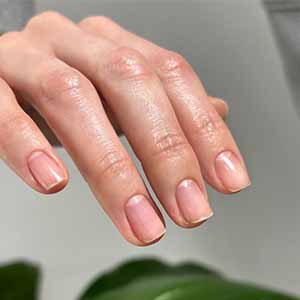
Onycholysis, or the separation of the nail plate from the nail bed, is a problem that can affect many people, especially those with weak nails. There are many onycholysis nail disorder pictures that illustrate this problem and help to recognise it. Japanese manicure is a great solution for those dealing with this issue. By regularly applying Japanese manicure, nails become more resilient, less susceptible to damage, and their attachment to the nail bed improves. Consistent nail care, along with the Japanese technique, can effectively help in preventing onycholysis.
How Japanese manicures help with onycholysis:
- Strengthens nails: Regular use of the Japanese manicure technique makes nails stronger and less prone to damage.
- Protects against separation of the nail plate: Japanese manicure provides nails with essential nutrients that support their health and adhesion to the nail bed.
- Stimulates regeneration: Thanks to the use of a paste with natural ingredients, nails can regenerate faster, which is crucial in the case of onycholysis problems.
Expert tips on japanese style manicure
To get the most out of Japanese manicure, specialists recommend doing it regularly. Only regularity allows you to fully utilise its regenerative properties and keep your nails in excellent condition for a long time. Keep in mind that this method of care requires patience, as the results are not immediate. It is important to use only high-quality products during the treatment and to adapt the technique to the individual needs of your nails.
Key tips:
- Ensure proper nail hygiene: Before the treatment, thoroughly clean the nail plate to avoid infection.
- Use Japanese manicure regularly: For best results, it is recommended to perform the treatment at least once a month.
- Don't forget to moisturise: After a Japanese manicure, it is recommended to moisturise the cuticles and nails to keep them in good condition.
How to do a Japanese manicure at home?
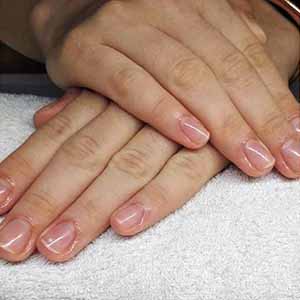
It is possible to do a Japanese manicure at home, but it requires the right tools and patience. Here is a detailed guide on how to do this treatment yourself:
Step 1: Preparing your nails
Before starting, make sure to clean your nails thoroughly. Remove any old nail polish if present, and then file your nails into the desired shape. Make sure your nails are thoroughly clean and dry to ensure the products are properly absorbed.
Step 2: Exfoliating your nails
A Japanese manicure usually starts with a gentle exfoliation of the nails. You can use a special scrub or nail product that exfoliates dead skin, improving blood flow and preparing your nails for the next steps.
Step 3: Application of nourishing paste
To carry out a Japanese manicure, apply a special nourishing paste, which is the essential component of this technique. Gently massage the paste onto your nails in circular motions. The paste is enriched with natural ingredients, including vitamins and minerals, that deeply nourish the nail plate.
Step 4: Polishing the nails
After applying the paste, it is time to polish the nails. Use a special polisher for Japanese manicures. Polishing allows the nutrients to be absorbed into the nail plate and gives it a natural shine. This should be done gently so as not to damage the nail.
Step 5: Moisturising the cuticles and nails
After performing a Japanese manicure, moisturise the cuticles and nails with a suitable oil or cream. This is a very important step that ensures long-lasting healthy and beautiful nails.
Step 6: Regularity
For best results, repeat the treatment at least once a month. Regular Japanese manicures will keep your nails in excellent condition, preventing breakage and other problems.
Performing a Japanese manicure at home can be easy if you have the right products and follow the above tips. Using this method, your nails will become healthy, strong and shiny!
Japanese manicure designs are an excellent option for those looking for a natural and effective way to care for their nails. With this method, your nails will not only be beautiful but also healthy, which will help you avoid problems such as onycholysis.