
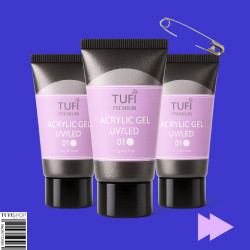
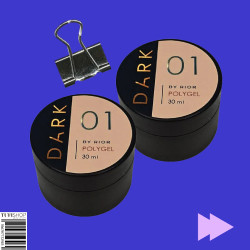
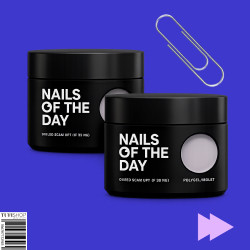
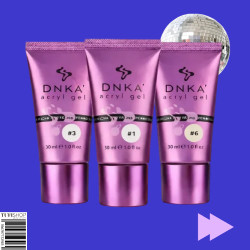
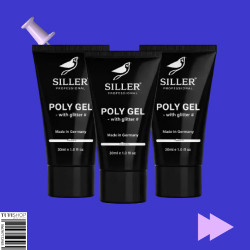

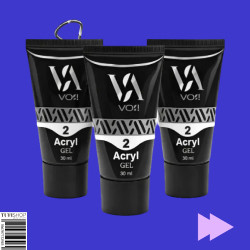
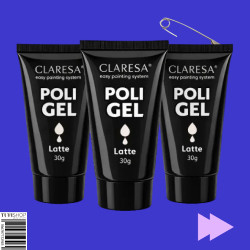
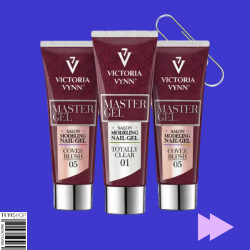
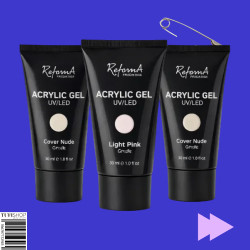

Camouflage polygel for nails — polygel Cover and camouflage effects
What is camouflage polygel and what is it for?
Camouflage polygel is a thick modeling material for strengthening and extending nails with a natural nude or pink shade. It masks surface irregularities and color differences, evens out the nail bed, and creates a neat nude-looking base. The material is suitable both for salon work and for experienced home users who want a durable, tidy result.
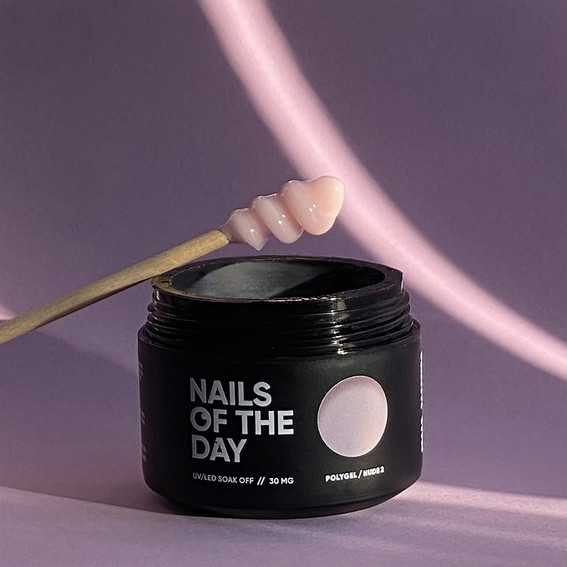
How to use camouflage polygel correctly?
Working with polygel combines aspects of gel and acrylic: the material doesn’t run into sidewalls, doesn’t flood, and gives you time for calm placement. At the same time, the residual tack is minimal, and filing is quick and controlled. You can use a camouflage-effect polygel over a base to reinforce natural length, or for full extensions on forms or tips.
Step-by-step application:
- Do a manicure, remove excess skin, and shape the free edge.
- Lightly buff to remove shine and thoroughly dehydrate/cleanse the plate.
- If needed, apply a thin layer of primer and let it flash off.
- Apply a thin layer of base under the polygel and cure in the lamp.
- Using a spatula, take a small amount of camouflage polygel and place it on the nail or into the dual/upper form.
- With a brush moistened in slip solution, distribute the material, forming the apex, even side lines, and a soft fade toward the cuticle.
- Cure according to the manufacturer’s instructions, refine with a light file if needed, and seal with a finishing top.
With this sequence, the surface comes out even, with tidy camouflage and a comfortable thickness without extra bulk.
Common mistakes and how to avoid them
Frequent issues with camouflage work relate to prep and shade selection. Insufficient dehydration and skipping primer lead to lifting in the stress area. Layers that are too thick can cause discomfort during curing and overload the nail plate. Another mistake is choosing a shade that’s too dark or too light for the skin tone, which makes the result look artificial. To prevent this, match the polygel to the client’s undertone, apply one to two moderate layers, and distribute product carefully around the cuticle and sidewalls.
How to choose a good camouflage polygel?
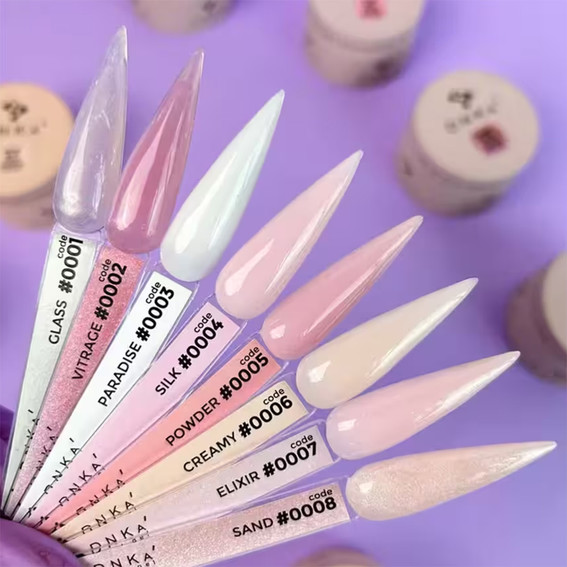
Consider viscosity, pigmentation level, and your intended use. For everyday reinforcement and slight lengthening, a more elastic camouflage polygel cover works well—one that levels easily and needs minimal filing. For complex sculpting, architecture correction, and working with longer lengths, choose a stiffer formula that holds its shape and doesn’t shrink after curing.
Pay special attention to the shade range: a quality camouflage polygel for nails offers several nude tones—from milky beige to natural pink—without muddy or gray undertones. Such a product won’t streak, provides even tonal coverage, and keeps a beautiful color during wear without yellowing or dulling.
Where to buy quality camouflage polygel?
It’s safest to shop at specialized nail-supply stores that stock professional brands and fresh batches. In the online store Tufishop you’ll find different camouflage polygel options with convenient viscosity, well-designed nude shades, and detailed descriptions. This makes it easy to select a formula for your working style—reinforcement, extensions, or a refined French—and to add bases, tops, and auxiliary products for a complete modeling system in one order.