

This site uses Cookies that are required for the technical operation of the website and are always set. Other cookies that increase convenience when using this website, are used for direct advertising or are intended to simplify interaction with other websites and social networks are only set with your consent.
Cookies that increase the comfort of using this website, are used for direct advertising or are intended to simplify interaction with other websites and social networks are only set with your consent. More information
REJECT ACCEPT ALLWell-groomed hands have long become part of the image of a modern person. A neat manicure indicates attention to detail, tidiness, and good taste. But even the most beautiful coating will not look neat if the nail shape is uneven or the plate is damaged. That is why choosing the right tool plays a key role. At first glance, an ordinary file the nail tool can either improve the condition of the nail plate or ruin it if chosen incorrectly.
Today, dozens of options can be found in stores, and they all differ in material, abrasiveness, and purpose. In order not to get confused by the assortment, it is important to understand what types of nail files exist and what each of them is intended for. A properly selected tool makes the manicure faster, safer, and significantly neater.
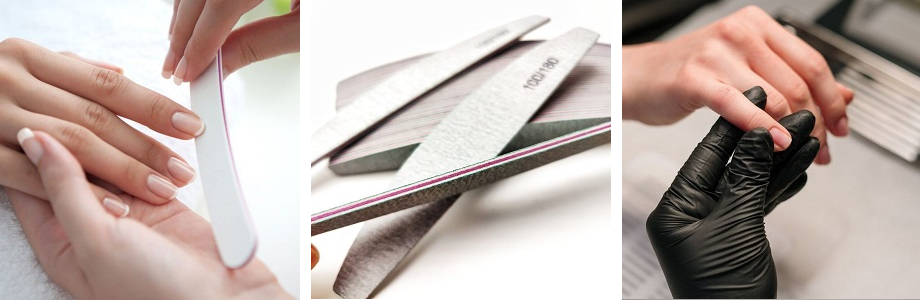
You can notice numbers on every file – this is the abrasiveness indicator called grit. It shows how coarse or fine the surface of the tool is. The lower the number, the harsher the file and the more actively it removes material.
The correct hardness of files nail helps avoid cracks, splitting, and thinning of the nail plate. The main categories of abrasiveness:
The thinner and weaker the nails, the higher the grit number should be. Using a file that is too coarse leads to the free edge starting to crumble and the nail splitting.
The material directly affects the lifespan of the tool, the convenience of work, and the manicure result. The main varieties of pro nail file differ not only in appearance but also in the feeling during work, durability, and the degree of impact on the nail plate. The comfort of the procedure and the final manicure result depend on the selected tool.
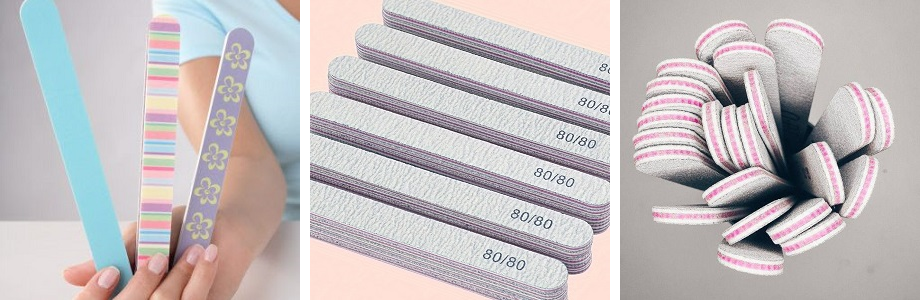
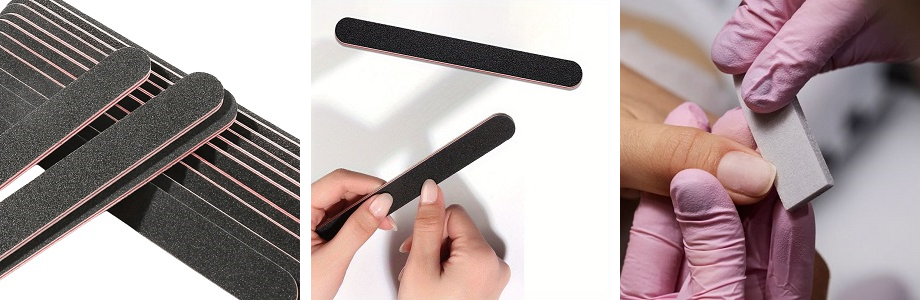
Tools are also divided into reusable and disposable models. Reusable options require regular disinfection but last significantly longer.
The natural plate requires careful handling. A good nail files option with an abrasiveness of 180–240 grit is suitable for this purpose.
If the nails are thin and prone to splitting, it is better to choose a glass tool. A quality crystal file for nails will carefully seal the edge, preventing cracks, and its regular use will help maintain shape and reduce nail brittleness.
When working with gel polish, a file is needed to prepare the surface and remove shine. Usually, tools with an abrasiveness of 180–220 grit are used for gel polish. Such nail files carefully prepare the surface, do not injure the natural plate, and at the same time ensure good adhesion of the material to the nail. The main thing is moderation: overly aggressive filing can thin the surface and weaken the nail.
Artificial materials are significantly harder than the natural nail plate, therefore they require a different approach. For correcting shape and length, pro nail file tools with an abrasiveness of 80–150 grit are used.
Such tools allow you to quickly remove excess material, level the surface, and prepare the nails for further treatment. It is not recommended to use them on natural nails, as high rigidity may lead to damage.
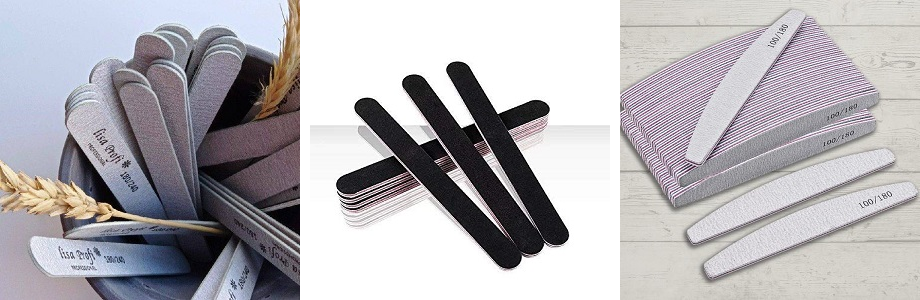
For classic filing of the free edge, files with medium abrasiveness – 180–220 grit – are best suited. These are universal top rated nail files that make it easy to create any shape: square, oval, almond, or soft square.
With the correct technique when you file nails, the nail edge remains even, smooth, and neat, without chips or splitting.
If it is necessary to significantly reduce the length, especially on extended nails, coarser files with an abrasiveness of 80–100 grit are used. They remove material faster and noticeably save time.
Removing gel polish or correcting artificial coating requires the use of rigid tools with an abrasiveness of 80–120 grit. They effectively remove material and allow you to quickly prepare the nails for the next stage of the procedure.
In hard-to-reach areas, a narrow pro nail file may be used. Its slim shape helps carefully treat complex zones and reduce the risk of skin injury.
After filing, the nail surface needs leveling. For this purpose, polishing nail files with soft abrasiveness – from 400 to 3000 grit – are used.
Buff files are especially popular. They have several working sides with different levels of hardness and allow you to sequentially level the surface, remove small irregularities, and give the nails a natural shine. Polishing makes the nail plate visually more well-groomed and smooth.
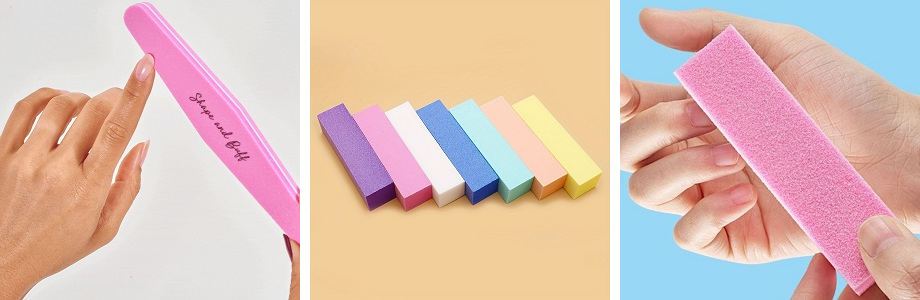
The cuticle and sidewall area requires a particularly delicate approach. Narrow files with fine abrasiveness or diamond tools are used here.
They help gently remove rough skin without damaging sensitive areas. All movements should be smooth, without strong pressure or haste.
One of the most common problems is buying the first file available without considering its characteristics. Such an approach often leads to deterioration of nail condition.
The most frequent mistakes:
It is also worth mentioning excessive polishing. Too frequent use of a buffer thins the nail plate and makes it more vulnerable.
Even the highest quality best nail files require proper care. This affects not only their lifespan but also the safety of the manicure.
Basic care rules:
Following these recommendations helps keep tools in good condition and makes the manicure not only beautiful but also safe.
Disposable tools are more often used in salons. This ensures a high level of hygiene and eliminates the risk of infection.
Home files should be replaced as they wear out. Even the highest quality reusable model gradually loses its abrasiveness and stops performing its function effectively.
The correct choice of a file is the foundation of a beautiful and safe manicure. When the tool is selected taking into account the nail type and tasks, the procedure becomes comfortable, and the result neat and long-lasting. By paying a little attention to choosing the right file and understanding how do you file nails properly, you can preserve the health and beauty of your nails for a long time.
You can purchase a nail file in the online store Tufishop. In addition, you can buy manicure accessories, gel polishes, nail extension gels, primers, dehydrators, curing lamps, buffers, manicure drill bits, and much more from us. Our specialists will gladly help you choose the products you are interested in and all the necessary related materials. We work every day, deliver orders worldwide, and always offer our regular customers the best cooperation conditions and pleasant discounts! We are waiting for you at Tufishop!
WhatsApp
+48 45 956 69 09
 How to use a promotional code
Enter the promotional code in the appropriate field before placing your order.