

This site uses Cookies that are required for the technical operation of the website and are always set. Other cookies that increase convenience when using this website, are used for direct advertising or are intended to simplify interaction with other websites and social networks are only set with your consent.
Cookies that increase the comfort of using this website, are used for direct advertising or are intended to simplify interaction with other websites and social networks are only set with your consent. More information
REJECT ACCEPT ALLThe world of nail art is evolving: matte minimalism has given way to deep, luminous textures. Rubbing powder, which has returned from the past decade, has become the main trend of the season, symbolizing elegance and futuristic chic. Today it is the perfect way to create a liquid metal or pearl effect that matches the demand for the “glazed” aesthetic. Let’s explore how to work with this material and why nail rubbing powder has become a must-have in every technician’s kit.
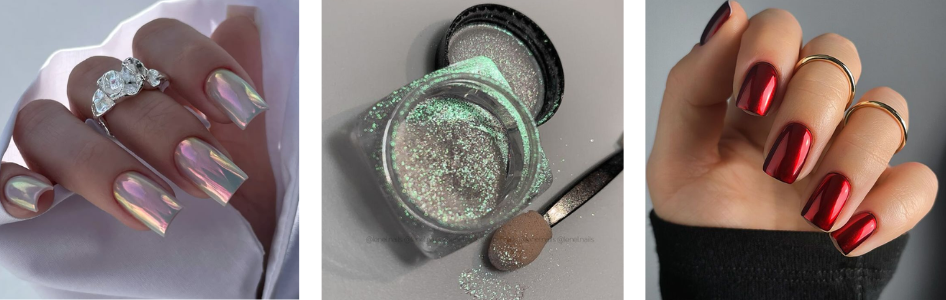
Nail powder is an ultra-fine polyester pigment that is rubbed into the coating to create a seamless shine. Unlike glitter, high-quality nail powder forms a perfectly smooth surface without visible particles.
There is a huge variety of decorative powders on the market, each creating a unique visual effect. To make the choice easier, here are the most popular types:
It is important to understand the difference between products. For example, dip nail powder is mainly used for strengthening, while rub powder is a decorative finish. Systems based on dipping powder on nails are designed to build structure and durability, whereas rubs are applied at the final stage for shine. In classic dip powder nails techniques, the powder forms the base of the coating, while rub powders are used only for visual effects.
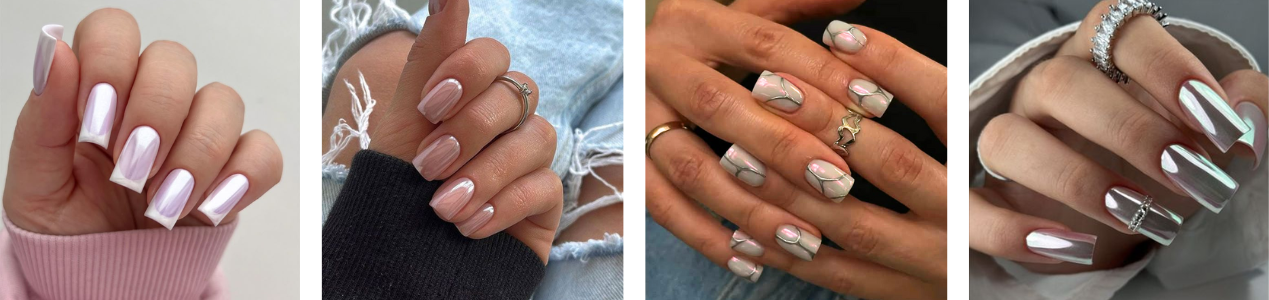
The return of rubbing powder is no coincidence. It is closely linked to the “Clean Girl” and “Old Money” aesthetics, where neatness and a luxurious yet understated look are valued. Pearl and satin reflections fit perfectly into this concept. In addition, social media platforms such as TikTok and Instagram have played a decisive role in popularizing pigment-based designs. Viral videos showing the creation of mirror-like shine gather millions of views and inspire technicians to experiment.
The trend was launched by Hailey Bieber with her famous “glazed donut” manicure.
Celebrities like Dua Lipa prefer bolder options—metallic finishes. Chrome powder for nails in steel or graphite shades makes the look more luxurious and expressive, turning the manicure into a “new black” accessory.
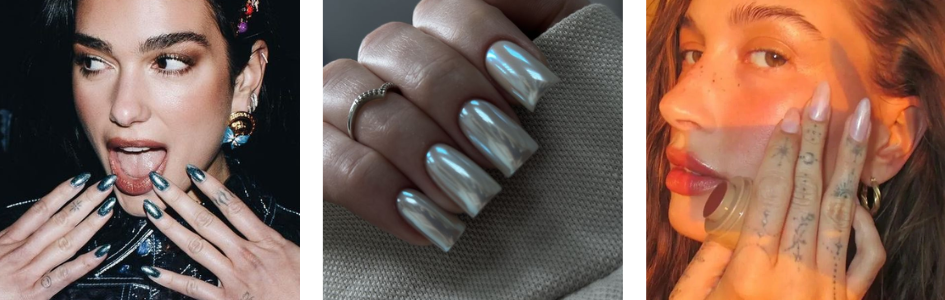
Modern technicians are no longer limited to standard rubbing techniques. Popular methods now include:
Thanks to innovative products, rubbing powder can be used not only on a solid base but also to create complex design solutions where color reflections change depending on lighting and hand movement.
Why do technicians and clients love this design so much? In addition to visual appeal, rubbing powder offers several practical advantages.
Unlike complex hand painting that can take hours, a rubbing powder design can be done in minutes. With quality materials and the right top coat, the process feels like magic: a few movements with a sponge or finger — and the perfect shine appears.
Various nail rubbing powders allow technicians to create endless color solutions without buying hundreds of bottles of colored gel polish. The same pigment on a black, white, or nude base will look completely different. This saves space on the workstation and reduces costs.
When applied correctly, rubbing powder lasts as long as the base coating — from 3 to 4 weeks. It does not fade (when sealed with a quality top coat with UV filter) and does not chip. Ultra-fine nail powders bond with the surface of the top coat on a molecular level, creating a seamless effect. This distinguishes rubbing powder from large glitter or foil, which may peel off.
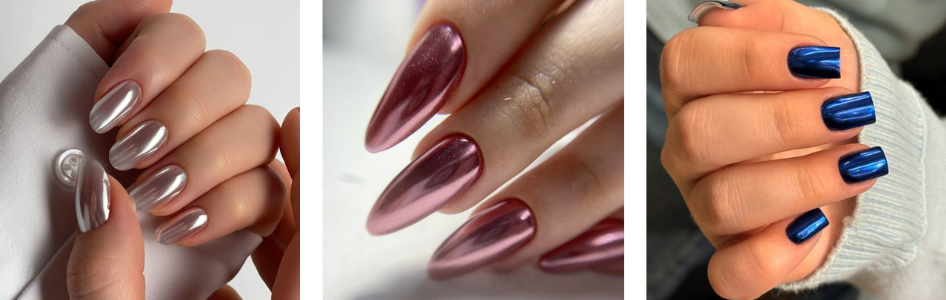
In addition, the mirror surface reflects light well, hiding minor imperfections of the nail plate if the leveling was not perfect.
Working with rubbing powder requires following the correct technique. Even small deviations can cause the pigment to roll, fade, or chip within a few days.

Even experienced nail artists sometimes face issues. Here is a checklist of what to avoid:
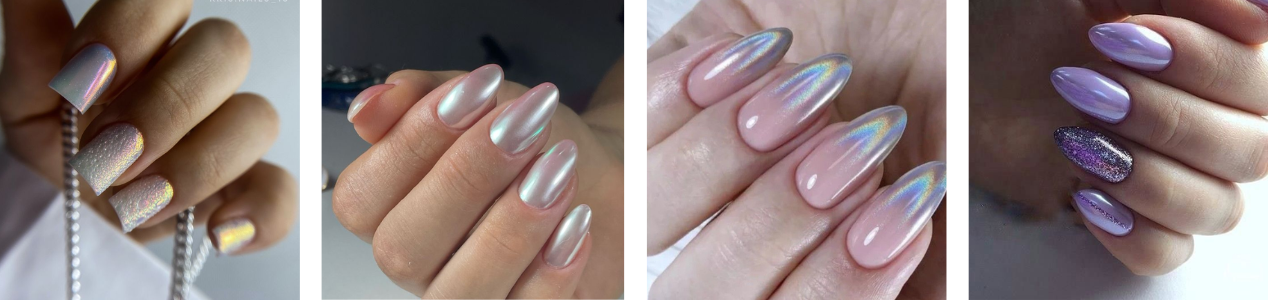
Rubbing powder is a universal tool. It can create both bold and subtle designs. In 2024–2025, the following directions are especially popular.
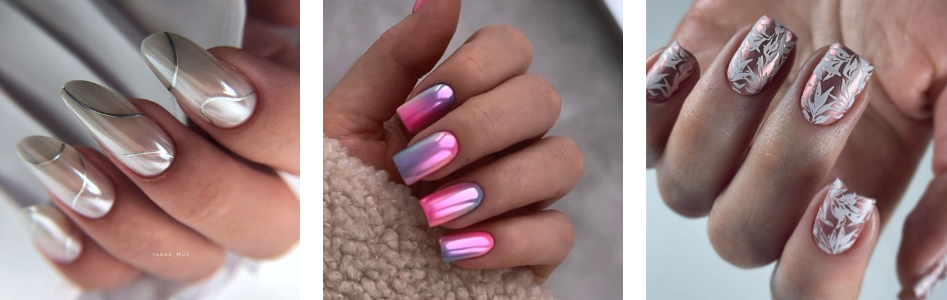
Colored metallic French tips and the “Aura” effect with a soft center gradient are especially popular. Stamping covered with rubbing powder (casting imitation) also looks impressive.
For those who love experiments, combining different textures works well. For example, dip powder nails (as a strengthening base) can be covered with a matte top coat, then decorated with a glossy rubbing powder pattern. The contrast of velvet and metal looks stunning.
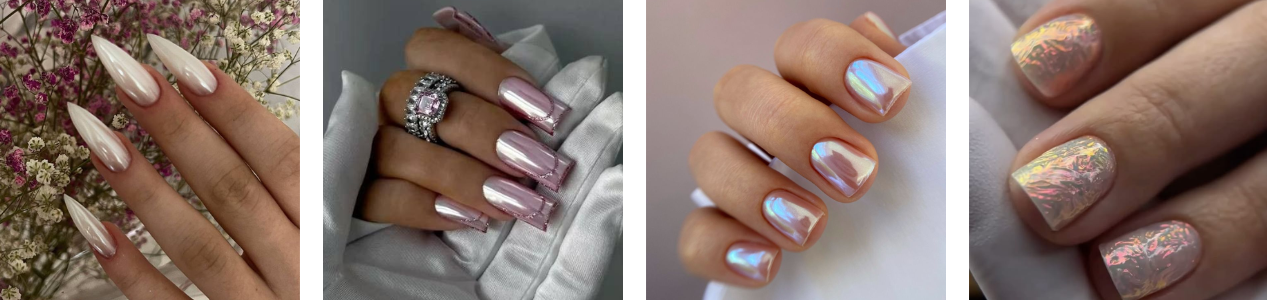
Nail length and shape influence the choice of pigment shade.
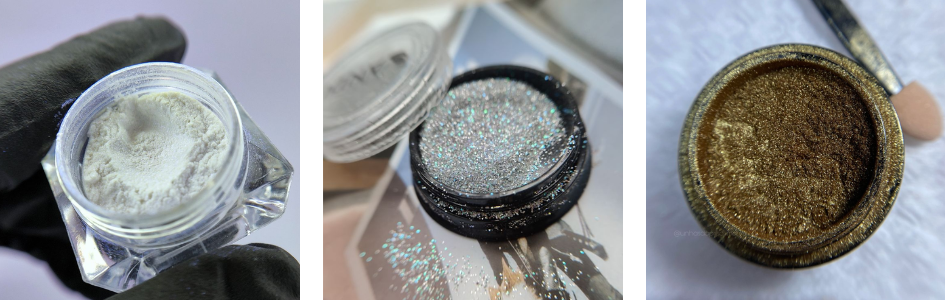
The quality of the material directly affects the result. Good rubbing powder should be extremely fine (almost like flour). If you see separate glitter particles in the jar, a mirror effect will not be achieved.
When choosing, pay attention to:
In the online store Tufishop, you will find a wide assortment of nail decorations. Here you can choose both classic mirror powders and trendy new arrivals. High-quality nail rubbing powder ensures your manicure will look impressive.
In conclusion, rubbing powder has returned to stay. It has transformed from a festive decoration into an element of everyday style. Whether it is subtle pearl or bold chrome, this small jar of shimmering pigment can transform any manicure. Do not be afraid to experiment — shine is more fashionable than ever.
WhatsApp
+48 45 956 69 09
 How to use a promotional code
Enter the promotional code in the appropriate field before placing your order.