

This site uses Cookies that are required for the technical operation of the website and are always set. Other cookies that increase convenience when using this website, are used for direct advertising or are intended to simplify interaction with other websites and social networks are only set with your consent.
Cookies that increase the comfort of using this website, are used for direct advertising or are intended to simplify interaction with other websites and social networks are only set with your consent. More information
REJECT ACCEPT ALLWhen cold weather arrives, many of us notice how our skin changes. Favorite rings suddenly highlight not the elegance of our fingers, but dry, flaky knuckles, and the usual hand cream stops doing its job. It’s familiar to everyone: the contrast between outdoor cold and the overly dry indoor air is a real challenge for beauty. The skin on our hands is like a passport — it’s the first to reveal not only age, but also how carefully we take care of ourselves.
Why do hands suffer first? The answer lies in physiology. The skin on the back of the hands is very thin, with almost no subcutaneous fat and very few sebaceous glands that could create a natural protective barrier. That’s why winter hand care should be completely different from a summer routine. If in summer light hydration is enough, in winter you need “heavy artillery”: nourishment, protection, and repair.
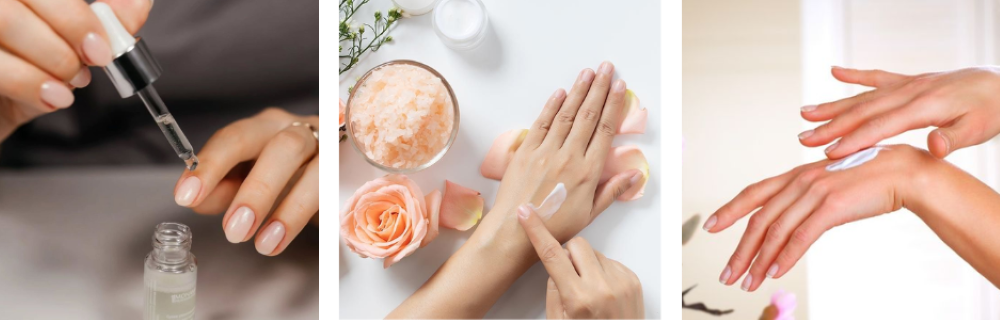
Ignoring the issue can lead not only to cosmetic flaws, but also to dermatological problems: microcracks, cold eczema, and premature aging. The main goal during this period is to restore the skin’s hydrolipid barrier, which keeps moisture inside.
To keep your hands looking well-groomed, unfortunately one type of cream is not enough. A comprehensive approach means having an arsenal of products, each with its own function.
Here’s a basic checklist of what should be on your shelf (or in your bag):
Important! Don’t apply a water-based moisturizer right before going out into freezing temperatures. Water in the pores can crystallize and injure the epidermis.
Many people make the mistake of starting to apply cream intensively only when the hands are already cracked. In reality, hand care in autumn and winter should begin proactively — with the first drops in temperature. Autumn is a transition period when the body adjusts. The wind becomes colder and the humidity falls.
Preparation starts from the inside and the outside. First, reconsider your hand-washing product. If you used antibacterial soap in summer (which dries the skin a lot), in autumn it’s better to switch to a cream soap with oils or gentle foaming cleansers with a neutral pH.
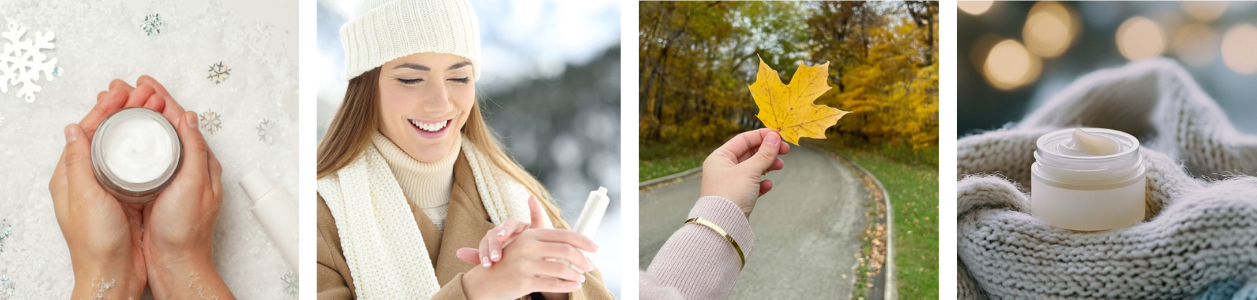
Second, introduce the “gloves rule”. This is not only about warm mittens outdoors, but also rubber gloves at home. Dishwashing, mopping, or hand-washing laundry in hot water with aggressive household chemicals strips the skin’s protective layer faster than frost does.
In autumn, central heating turns on and indoor humidity drops to a critical 20–30% (while the normal range is 40–60%). In these conditions, moisture literally evaporates from the skin’s surface.
To make care for dry hands in winter and autumn effective, follow these recommendations:
Winter care is a ritual that requires consistency. If you apply cream once a week, miracles won’t happen. The key principle is constant protection. Winter hand skin care stands on three pillars: cleansing, deep nourishment, and paraffin therapy.
One of the most popular treatments right now is paraffin therapy. It used to be strictly a salon procedure, but now it’s easy to do at home. A cold paraffin cream warms the tissues nicely, improves circulation, and “seals” beneficial ingredients into the skin.
Let’s break down a step-by-step routine that helps you avoid the “sandpaper” feeling:
Good winter hand care at home is impossible without regular exfoliation. Once a week, use a gentle scrub. It removes flaking and helps nourishing ingredients work at full strength.
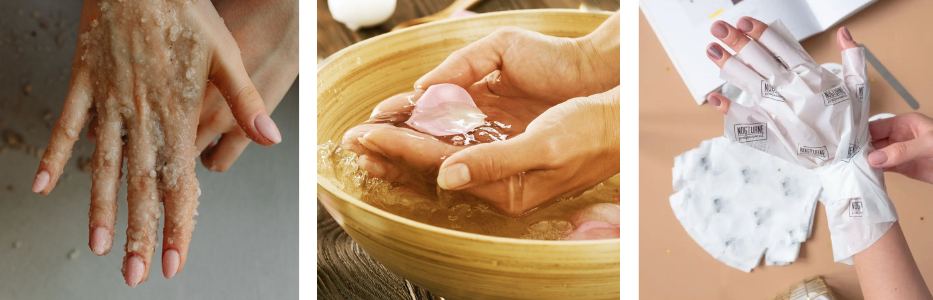
When choosing cosmetics, look not at the pretty packaging but at the formula. In winter, lightweight gels don’t work. You need rich textures (butters) and occlusive components that create a protective film.
|
Ingredient |
Action |
Best for |
|
Urea |
Powerful humectant, exfoliates |
Very dry, rough skin; cracks |
|
Shea butter (Karité) |
Nourishes, reduces irritation |
Core winter care; wind protection |
|
Panthenol (B5) |
Heals, soothes |
Redness, micro-damage, windburn |
|
Glycerin |
Creates a protective film |
Moisture retention (best when indoor humidity is normal) |
|
Beeswax |
Protective barrier |
Repels water; shields from harsh environments |
You can find professional products with effective formulas, as well as everything needed for paraffin therapy, in specialized stores. At Tufishop you’ll find a wide range of both home-care lines and professional brands used by nail technicians.
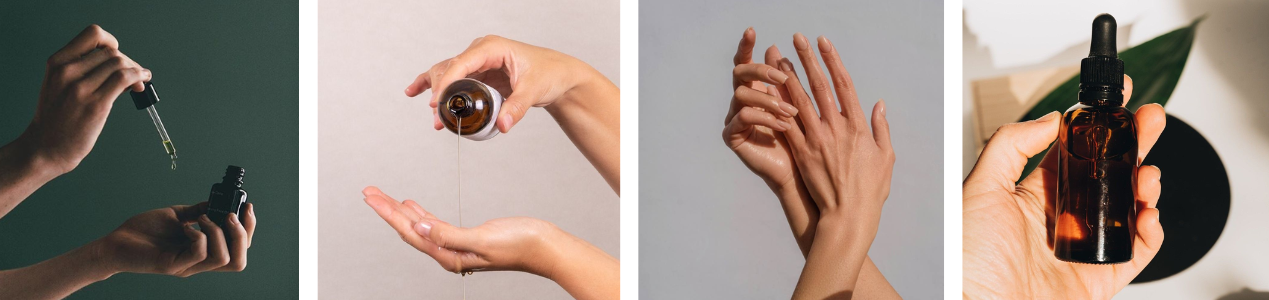
In winter, it’s not only the skin that suffers. Due to temperature swings and dryness, the nail plate becomes brittle, starts to peel and break. Under gel polish you may not notice it right away, but once you remove the coating the problem becomes obvious. Nails can twist, and the coating holds worse.
At-home winter nail care should focus on maintaining nail plate flexibility. A dry nail is a brittle nail.
To help your nails get through winter without damage, follow a few simple rules:
Remember: hands are the tool we use to create, to hug the people we love, and to work — so they deserve the gentlest care.
WhatsApp
+48 45 956 69 09
 How to use a promotional code
Enter the promotional code in the appropriate field before placing your order.